While exploring the impact of stablecoins on the future of money, I have found that public discussion of digital money often tends to conflate three things that are analytically distinct: the monetary instrument itself, the form in which it is stored or represented, and the infrastructure used to move it between parties. I believe that separating them assists understanding what is genuinely new about stablecoins and tokenised deposits, what is merely a change of form or rail, and where the real regulatory and systemic questions lie.
The three questions are:
• what is the money instrument (the underlying claim and who stands behind it)?
• how is it held (the representation or storage form)? and
• how does it move (the payment rail or transmission infrastructure)?
Each has a different answer for central bank money, bank deposits, and fiat-backed stablecoins — and the differences matter at each level independently.
The Monetary Instrument
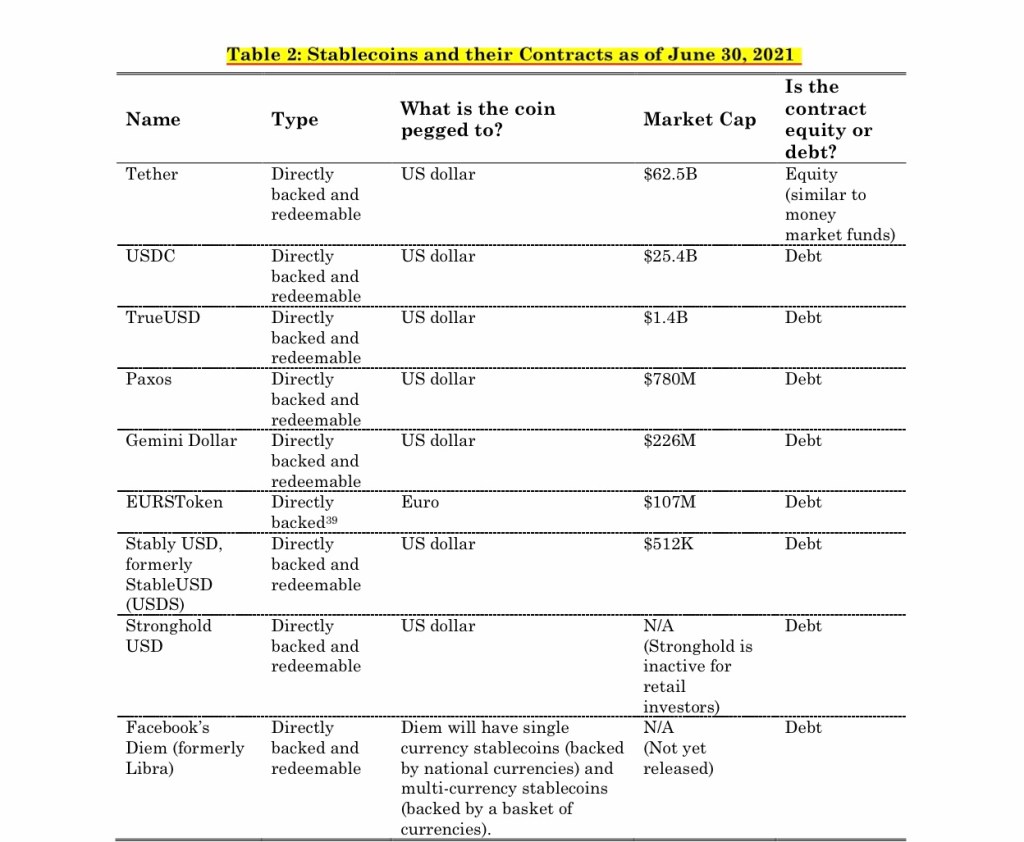
The monetary instrument is the underlying claim: i.e. the asset you actually own when you hold money. For central bank money, this is the liability of the central bank — a claim on the state that is backstopped by the sovereign’s taxing power and the central bank’s capacity to create reserves. For commercial bank deposits, it is a claim on an individual bank, convertible at par into central bank money on demand, and backstopped by deposit insurance, banking regulation, and lender-of-last-resort facilities. For a fiat-backed stablecoin, it is a claim on the issuer, redeemable for the reference fiat currency, and backstopped only by the reserve assets held and the legal framework governing redemption.
The monetary instrument is defined by who is liable (central bank, commercial bank, or stablecoin issuer), what backs that liability (sovereign authority, deposit insurance and capital, or reserve assets), and what rights the holder has (redemption at par, deposit insurance coverage, bankruptcy priority).
These are properties of the instrument regardless of how it is stored or how it is transmitted. A bank deposit is the same instrument whether it is accessed via a cheque book, a debit card, an online banking portal, or a tokenised deposit on a blockchain. The underlying claim — and its legal, regulatory, and credit characteristics — does not change because the representation changes.
The Representation and Storage Form
The representation form is how the monetary instrument is recorded, held, and evidenced. This is the dimension most directly affected by digitisation. Historically, representation forms have included: physical notes and coins (bearer instruments, value in the object); entries in a bank’s paper or electronic ledger (account-based, value in the record); and book entries in a central bank’s reserve account system (account-based, institutional access only).
Tokenisation is a change of representation form, not of monetary instrument. A tokenised deposit is the same bank deposit claim represented as a programmable token on a distributed ledger rather than as an entry in the bank’s conventional core banking system. The EBA (December 2024) is explicit on this point for EU law: a tokenised deposit remains a deposit for all legal and regulatory purposes.
The token is the envelope; the deposit is the contents. Similarly, a fiat-backed stablecoin token is the representation of a claim on the issuer — the token itself is not the money, it is the bearer instrument evidencing the money claim.
The representation form matters because it determines: programmability (can conditional logic be embedded?); composability (can the instrument interact with other on-chain instruments without conversion?); and bearer versus account-based character (does transfer require identity verification, or does possession of the token suffice?).
But changes in representation form do not, by themselves, change the nature of the underlying monetary claim or its regulatory treatment — though they may reveal that the regulatory framework was not designed with that representation in mind, creating classification gaps.
The Payment Rail
The payment rail is the infrastructure used to transmit value between parties: the pipes, protocols, and settlement systems through which money moves. The rail is analytically independent of both the instrument and its representation form. The same bank deposit can be transmitted via SWIFT (correspondent banking), Faster Payments (domestic push), RTGS (large-value settlement), a debit card network (Visa/Mastercard acquiring infrastructure), or a mobile payment app (M-Pesa, Venmo). The instrument does not change; the rail does.
For stablecoins, the blockchain is the payment rail. Solana, Ethereum, Tron, and Base are rails — infrastructure choices that determine transaction speed, cost, finality, programmability, and geographic accessibility. A USDC token on Solana and a USDC token on Ethereum represent the same underlying claim on Circle (the issuer) but travel on different rails with different properties. The rail choice affects the user experience and operational risk profile of a payment, but does not change what the USDC token is: a claim on Circle’s reserve pool, redeemable 1:1 for US dollars.
Some implications
The conflation of rail and instrument is I believe the source of several analytical errors that appear in policy discussions. When commentators argue that stablecoins are ‘just a payment method’, they are (correctly) identifying that the blockchain is a rail, but they may also be (incorrectly) implying that this makes the stablecoin token equivalent to a bank deposit. Comparisons of stablecoin transactions with credit card payments are I think equally problematic. It is rare in my experience to see much discussion of how fast payment systems stack up against stablecoins in terms of cost and speed. The added cost and complexity of the on/off ramps with the traditional banking system may also be missing.
The rail properties of a blockchain — open access, programmability, pseudo-anonymous transfer, irreversible finality — are genuine and consequential differences from RTGS or card networks. But there are significant differences between a stablecoin and a bank deposit at the instrument-level: who is liable, what backs the claim, whether deposit insurance applies, and whether settlement occurs in central bank money.
A further rail-level property requires explicit treatment: settlement finality on public blockchains is probabilistic, not absolute. On proof-of-work networks, finality accumulates over multiple block confirmations; on proof-of-stake networks such as Ethereum, economic finality is reached after two checkpoint epochs (approximately 12–15 minutes), though transactions may be practically irreversible within one or two blocks in most conditions. Solana’s optimistic confirmation model offers near-instant practical finality but with a technically distinct guarantee than Ethereum’s checkpoint-based economic finality. This contrasts with RTGS systems (Fedwire, TARGET2, CHAPS) where settlement is legally final and irrevocable the moment it is posted to the central bank’s books.
The finality distinction has direct institutional adoption implications: settlement finality is a legal and operational requirement for securities settlement (Delivery vs. Payment), large-value interbank transactions, and any use case governed by the EU’s Settlement Finality Directive or equivalent. A public blockchain rail that cannot offer the same finality guarantee as an RTGS system is not a direct substitute for those use cases until either the regulatory framework recognises on-chain finality as legally equivalent, or wholesale CBDC rails provide a bridge between blockchain settlement and central bank money finality.
I suspect that I am only scratching the surface of this topic and I am straying way outside my area of expertise so treat the above with caution. I am writing it down to clarify for myself the extent to which I have an understanding of the topic.
Feedback welcome on anything I have wrong or that I am missing
Tony – From the Outside

 From the outside